
Nothing we do is sustainable. Can everything we do be regenerative?
Synopsis
Architect Francesco Allaix argues that in a world where six of nine planetary boundaries are already exceeded, sustainability alone is no longer enough – and even leading pioneers like Patagonia admit that “nothing we do is sustainable.” Drawing on regenerative principles, Doughnut Economics, and Studio Puisto projects in Lapland and Cyprus, he shows how adaptive reuse, ecosystem restoration, and data-driven design can nudge hospitality away from extractive models toward more regenerative practice, even if perfection remains out of reach.
First came sustainability, and slowly but steadily everyone jumped on the bandwagon. Now that this word has become a blanket of good intentions covering every project and product, we move on to the next one: regeneration. But are we merely changing words, paying lip service to these vague concepts or are we grasping with the true paradigm shift they entail?
A meta-study from Royal Swedish Academy of Science can help us to find some common treads in over 300 cross-disciplinary publications on regeneration and establish some shared tenets. The analysis identifies a few core principles of the regenerative paradigm. The one cited the most in the articles (86%) underscores the need for “inner world” changes, meaning complementing external solutions with inner transformation, for example changes in worldviews and business goals, frameworks and measurements. The second most common one calls for systems approaches, recognizing the need to break silos and adopt holistic ways of thinking. In third place comes the need to move beyond growth-oriented systems to promote long-term human and ecological wellbeing. The fourth most mentioned principle (63%) identifies as crucial prioritizing local knowledge, local communities and their well-being above the interests of external actors and short-term economic gains.
Are we willing and able to commit to the above tenets to call our projects and businesses regenerative?
It is not an easy question to answer with a resounding yes. Nevertheless, yes is the only answer we should have.
Scientists warn us that six of nine planetary boundaries are already broken, meaning that Earth is now well outside of its safe operating space. Our safe operating space has not been analyzed only by scientists but also by economists, like Kate Raworth. In her seminal book Doughnut economy, she describes a framework within which businesses, governments, and people must act.
The framework has a social foundation under which we shall not go otherwise social rights are infringed, and an ecological ceiling which we shall not break otherwise we are overshooting planetary resources. We must operate only between those two limits.
The global picture is not one of swift ecological adaptation, nevertheless many companies have walked the talk for long. One of the best examples is Patagonia, the clothing company. Patagonia has always had environmental and social impact at the core of their business, but it made big strides recently. The company gives 98% of its yearly dividends to a foundation established to fight the environmental crisis and protect biodiversity. “Earth is now our only shareholder” is how Yvon Chouinard, Patagonia’s founder, describes the move.
And yet the company admits in the last annual report that “nothing we do is sustainable”. Quite a dire and discouraging statement. But at a closer look what Patagonia is acknowledging is how difficult it is to truly implement a paradigm shift.
When we look at our business - designing hospitality projects around the world - I cannot but see the difficulties and contradictions that we stumble through. Can we claim that our office is doing regenerative projects? The honest answer is: it is complicated. Nothing we do is perfectly regenerative, but every project challenges the business-as-usual model.
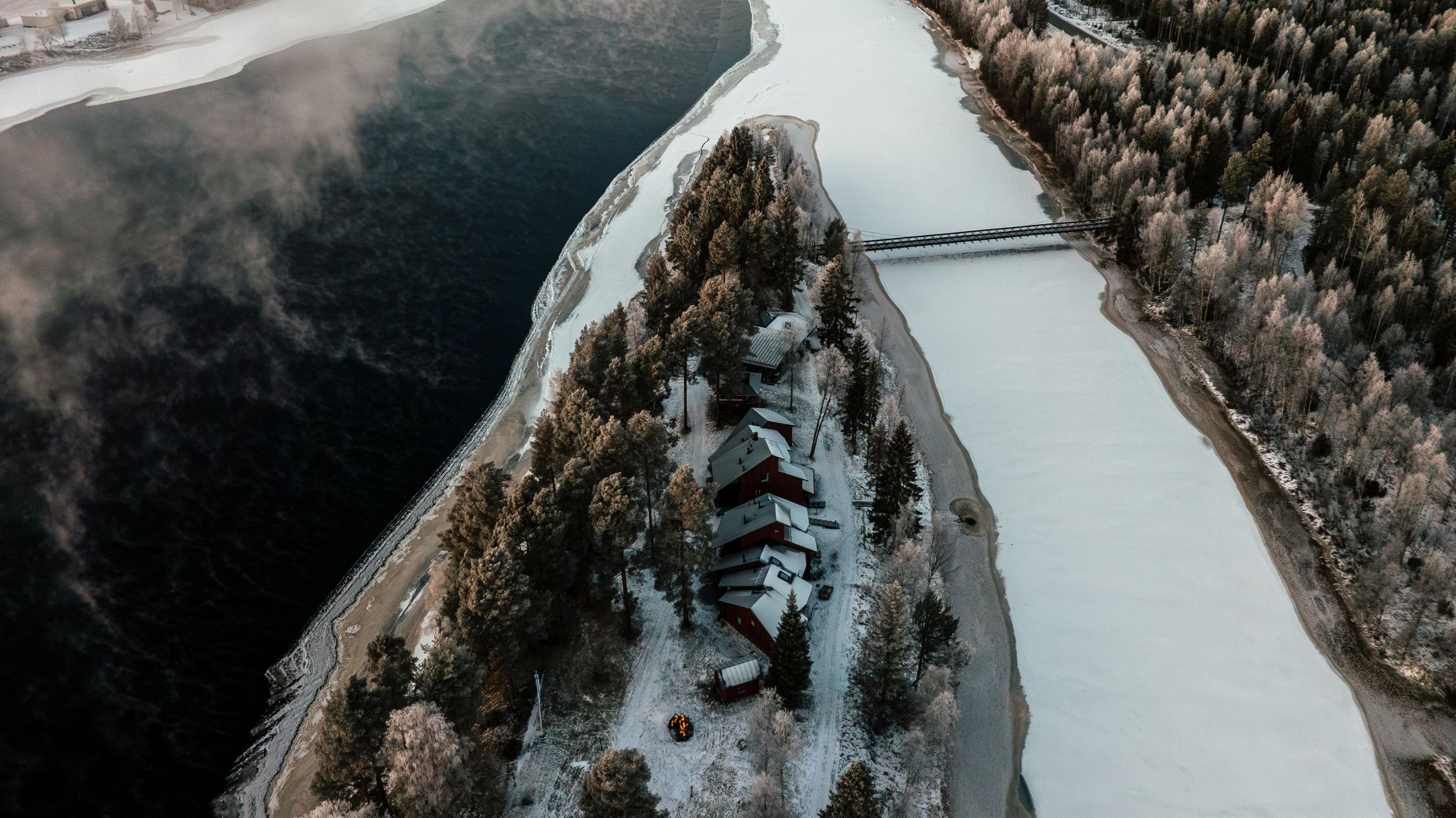
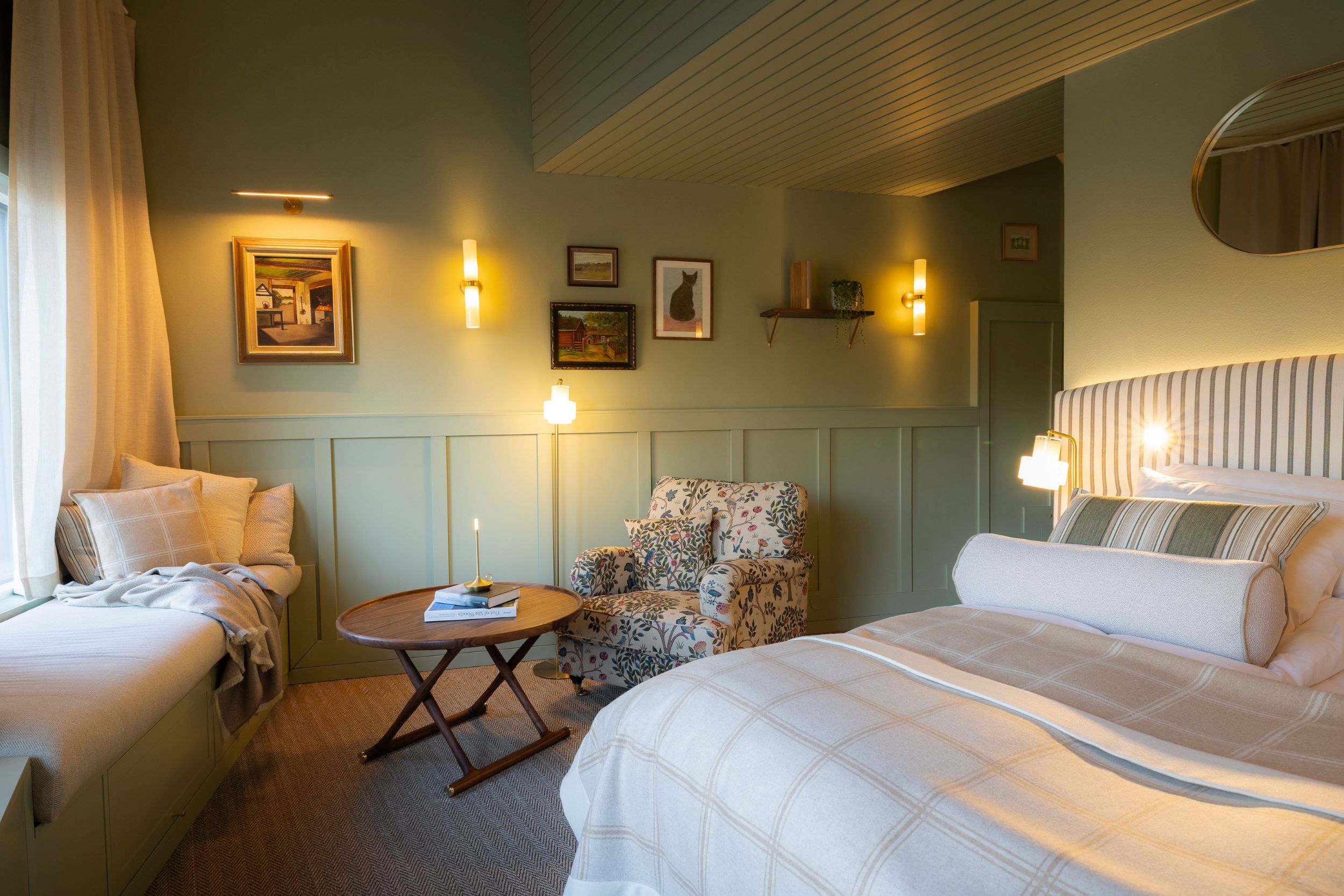
We have been working on the reuse of existing buildings, for example, transforming an old summer retreat in Lapland into a boutique hotel. The existing structures were preserved as much as possible significantly reducing the upfront carbon budget. Old wooden walls were strengthened rather than replaced, interior design incorporated and reused second-hand furniture, local carpenters helped to seamlessly integrate new and old elements. The guest experience is to provide an island of tranquility surrounded by nature. The most sustainable building is the one that is taken care of the longest, generation after generation. Regenerative processes imply preserving, mending, and embracing imperfections. It is a slow process that requires learning anew while it stretches time and memories.
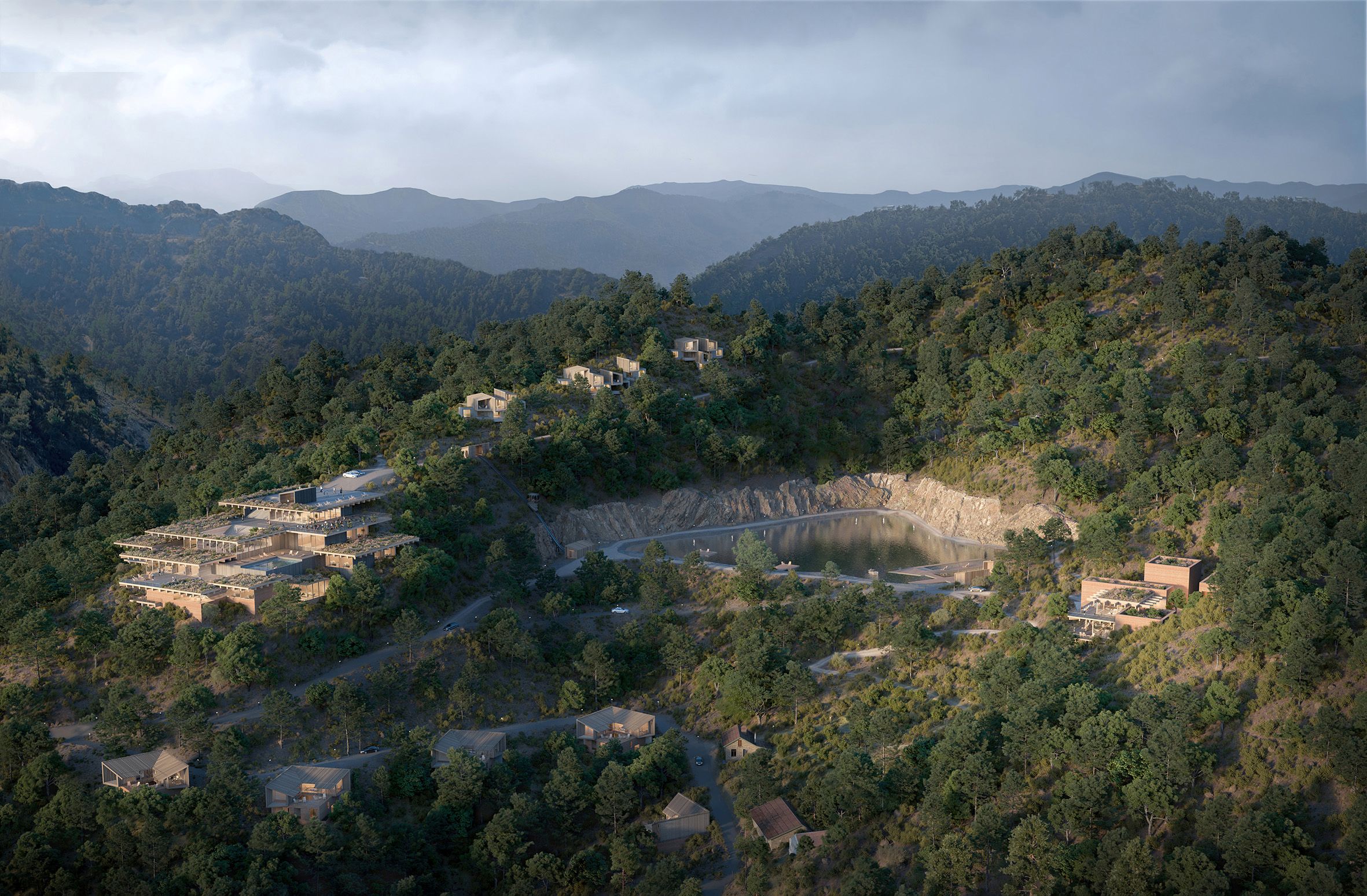
Regeneration means also improving existing conditions, in a landscape or community. We designed a resort in Cyprus in a lush valley.
The dominant tree in the area is pine and when left to grow unchecked it can impact on the competition and coexistence in the ecosystem. Therefore, the starting point was planting different species of trees, bushes, and flowers to trigger ecological restoration and improve soil quality. Landscape design and architecture design work hand in hand to regenerate the valley, regenerate the local community collaborating with the neighboring villages and providing new jobs, and regenerate guest’s body and mind. The project did improve the valley’s ecosystem, but we are not blind to the fact that tons of -biogenic and non- materials have to be transported and installed on site to build the resort.
Lastly, we are developing and integrating in our workflow both parametric and AI models that help us analyze the data. Therefore, decisions can be made on numbers rather than assumptions to choose the best options to reduce our buildings’ impact on the landscape by analyzing water, wind, and sun paths; to reduce the amount of material we use; to evaluate and reuse what is already available on site; to communicate complex issues to clients and stakeholders.
Reusing and adapting existing buildings, improving and integrating landscape with architecture, optimizing design by using new tools, are three key aspects we focus on. It is not enough yet, but we think it is important to put progress over perfection, regenerating hospitality one project at time.